
How Bolgatanga Baskets Are Made: Ghana's Ancient Weaving Tradition
The Birthplace of the Bolgatanga Basket
In the Upper East Region of Ghana, in a town called Bolgatanga — affectionately known as "Bolga" — a centuries-old weaving tradition continues to thrive. Here, skilled artisans craft the iconic Bolgatanga basket entirely by hand, using techniques passed down through generations of families.
These baskets are far more than functional objects. They are living expressions of Ghanaian culture, identity, and ingenuity — and every single one is unique.
The Raw Material: Elephant Grass
The story of a Bolgatanga basket begins with elephant grass (Pennisetum purpureum), a tall, sturdy grass that grows abundantly across the savannah of northern Ghana. Artisans harvest the grass by hand, then split and dry the strands before dyeing them in vivid, earthy tones using natural or locally sourced dyes.
The preparation of the grass alone can take several days — a reminder that true craftsmanship cannot be rushed.
The Weaving Process
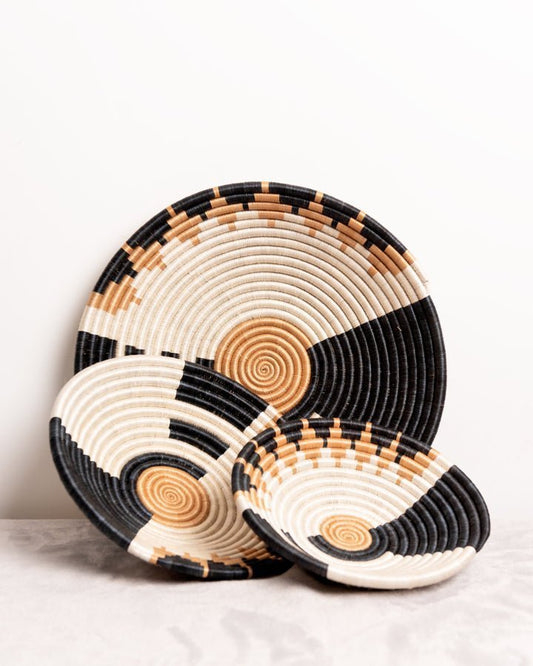
Once the grass is prepared, the weaving begins. Using only their hands and a simple awl, artisans coil and stitch the grass strands into tight, durable spirals. There are no moulds, no machines, and no shortcuts. The shape, size, and pattern of each basket emerge entirely from the weaver's skill and imagination.
A single medium-sized basket can take anywhere from two to five days to complete. Larger laundry baskets or intricately patterned pieces may take considerably longer.
The Artisans Behind the Craft
Basket weaving in Bolgatanga is predominantly carried out by women, though men also contribute — particularly to the leather-trimming and handle-wrapping that finishes many styles. The craft provides a vital source of income for families across the region and supports entire communities.
When you purchase a Bolgatanga basket, you are directly supporting these artisans and helping to sustain a tradition that might otherwise be lost to industrialisation.
Caring for Your Bolgatanga Basket
With the right care, a Bolgatanga basket will last for many years. Keep it away from prolonged direct sunlight to preserve the colours, and if it gets wet, allow it to dry naturally in a well-ventilated space. A light wipe with a damp cloth is all that's needed to keep the woven body clean.
Caring for the Leather Handle
Many Bolgatanga baskets feature handles wrapped or trimmed in natural leather — a hallmark of the craft's quality finish. To keep the leather supple and prevent cracking:
- Condition regularly: Apply a small amount of natural leather conditioner or beeswax balm every few months to keep the leather moisturised and flexible.
- Avoid water: Leather and water don't mix well. If the handle gets wet, blot it gently with a dry cloth and allow it to air-dry away from direct heat or sunlight.
- Store carefully: When not in use, store your basket in a cool, dry place. Avoid hanging it by the handle for extended periods, as this can stretch and stress the leather over time.
- Clean gently: For light dirt or marks, use a barely damp cloth and wipe in the direction of the grain. Avoid harsh soaps or chemical cleaners, which can strip the leather's natural oils.
With a little attention, the leather handle will develop a beautiful patina over time — a sign of a well-loved, well-used piece.
Explore Our Collection
At Nathez out of Africa, every basket in our range has been ethically sourced directly from artisan communities in Ghana. Browse our Hand-Woven Bolgatanga Bags and Baskets collection and our wider Baskets collection to find a piece that speaks to you.
Tags:
Related Articles
Coffee from Africa: African Coffee
Feb 26 2025
Support from our Market Adventures
Jul 15 2024